
How Middle East tensions reach the Maldives' supply lines
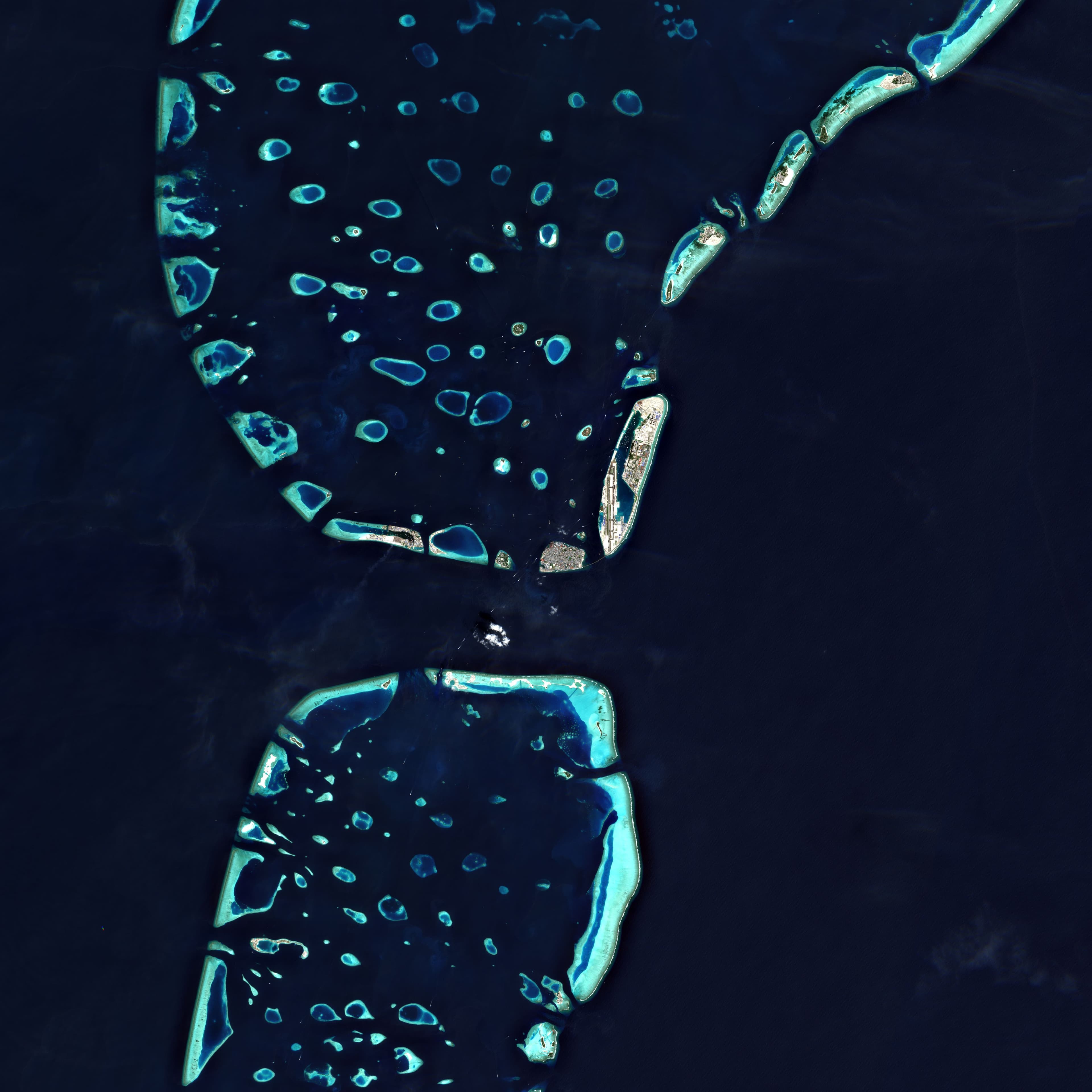
The latest round of fighting in the Middle East is being felt thousands of miles away in Malé, where the government has reactivated a Special Cabinet Committee on Middle East tensions and quietly begun work on a national fuel reserve. For an island nation that imports nearly every barrel of diesel it burns and almost every container of food it consumes, conflict in the Gulf is not a distant headline. It is a logistics problem with a price tag.
The Cabinet committee, reconstituted on 16 April after a brief lull in regional tensions, met again last week to take stock of supply lines. According to statements from the President's Office, three concerns dominated the discussion: the price and availability of imported fuel, the disruption of long-haul air corridors over the Gulf, and the potential for further volatility in shipping rates as carriers reroute around the Red Sea. The President's Office said work had begun on the national fuel reserve and that the committee was now in close communication with industry on stockpiles of essential goods.
The Maldives' macro-economy is unusually exposed to each of those channels. Tourism, the country's largest single source of foreign exchange, depends on long-haul flights from Europe, North Asia and the Gulf. Almost three-quarters of arrivals connect through one of three regional hub airports — Doha, Dubai and Abu Dhabi — and any disruption to the air corridors that feed those hubs translates into cancelled bookings within days. Visit Maldives Corporation's recent Tourism Intelligence Briefing, held in Malé on 21 April, was framed explicitly around that question.
The fuel exposure is more structural. The Maldives runs almost entirely on imported diesel, and the average resort island still depends on local generation for its electricity. The State Trading Organisation, which holds the dominant share of the fuel-import market, has historically maintained working stock equivalent to a few weeks of consumption. The Cabinet committee's reference to a national fuel reserve points to a more strategic posture, building physical stockpile capacity that would buffer the economy against a more sustained supply shock.
The shipping picture is the most unpredictable. A meaningful share of the country's container imports — flour, rice, construction steel, packaged goods for the tourism sector — moves on routes that pass through the Bab-el-Mandeb strait and on to Indian Ocean transhipment hubs. Carriers that have rerouted around the Cape of Good Hope have added between ten and fourteen days to typical voyage times and pushed up freight rates accordingly. Most of those costs eventually filter into landed prices on the islands.
The diplomatic posture has been deliberate. Officials in Malé have avoided taking visible sides in the Gulf conflict. The country's foreign minister has used recent multilateral fora to call for de-escalation and unimpeded humanitarian access, and the President's Office has framed the Special Cabinet Committee's work in supply-management terms rather than political ones. That stance reflects the Maldives' broader Indian Ocean position: a small state surrounded by powerful neighbours, whose security depends on keeping every major sea lane open.
It also reflects a structural truth. Two of the three air-corridor hubs that feed Maldivian tourism are Gulf airports, and Saudi, Emirati and Qatari companies are among the largest sources of foreign direct investment in the country, particularly in the Hulhumalé reclamation programme and in the resort-development pipeline. A diplomatic posture that maintained good working relations with all of them was already a baseline requirement of Maldivian foreign policy. The current tensions only sharpen it.
What follows from the Cabinet committee's work is likely to be a quieter version of what other small states in the region have done: tighter coordination with the State Trading Organisation on fuel cover; advance planning with the airline industry on alternate routings; and a clearer set of escalation thresholds at which government would publicly intervene in markets to protect the prices of essential goods. Officials have stopped short of publishing those thresholds. Privately, they have been clear that the comfort margins on rice, cooking oil and wheat flour are the ones being watched most closely.
For now, the supply chain is holding. Resort occupancy was running close to last year's pace through the first quarter, fuel deliveries have continued on schedule, and shelves in Malé's main markets remain stocked. But the Cabinet committee's reconstitution is a reminder that for a country whose entire economic geography runs on imported energy and imported food, the question of regional stability is never an academic one.
More from World
UAE reopens its airspace, restoring the Maldives' Gulf corridor
Nine weeks of route diversions, slot caps and cancelled rotations end with a single GCAA notice. Emirates, flydubai and Etihad can rebuild the full UAE–Malé schedule — and a tourism economy that runs on Gulf-hub connectivity gets its corridor back.
President to undertake a state visit to Sri Lanka
At the UN, a small state speaks for the islands
President and First Lady arrive in Saudi Arabia to perform Umrah