Three Scientists Win Nobel Medicine Prize for Controlling Nerve Cells with Light
Karl Deisseroth, Peter Hegemann and Georg Nagel are recognised for discoveries behind optogenetics, a method used to investigate brain activity.
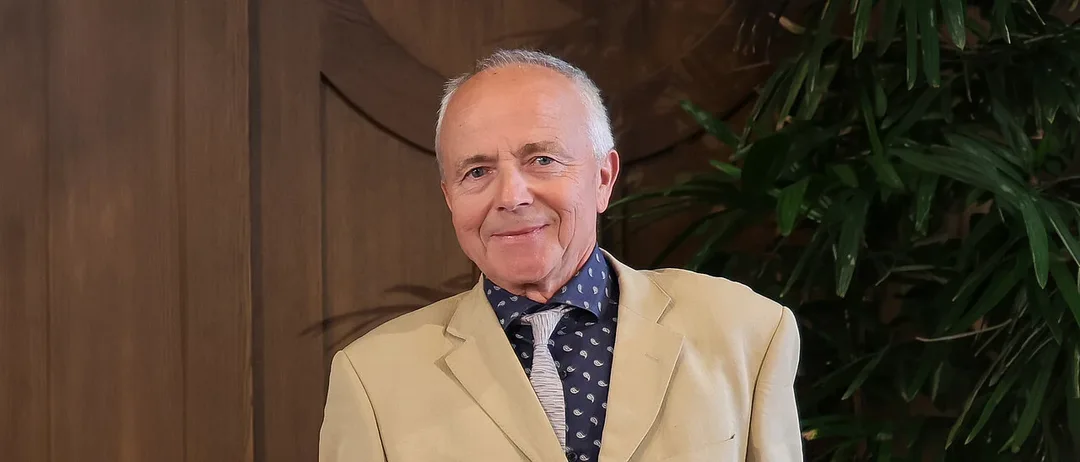
Karl Deisseroth, Peter Hegemann and Georg Nagel have won the 2026 Nobel Prize in Physiology or Medicine for discoveries that enabled scientists to control the activity of selected nerve cells using light.
The award, announced on 5 October, recognises work on light-gated ion channels and optogenetics, a technique now used in laboratories to investigate how neural circuits function.
Stanford University confirmed the award to Deisseroth, its professor of bioengineering and of psychiatry and behavioural sciences. He shares the prize with Hegemann of Humboldt University in Berlin and Nagel of the University of Würzburg.
The three researchers’ work links the study of light-sensitive proteins in microorganisms to experiments that allow particular nerve cells to be switched on or off.
From Light-Sensitive Proteins to Neural Circuits
The German Research Foundation, which has supported work by Hegemann and Nagel, described their research on channelrhodopsins, proteins that act as light-controlled channels in cell membranes.
When illuminated, the channels open and allow ions to move through the membrane, changing a cell’s electrical activity. The foundation said Hegemann and Nagel characterised these proteins in work with Ernst Bamberg.
Deisseroth developed a process for introducing light-sensitive microbial proteins, known as opsins, into mammalian brain cells. That allowed researchers to control selected cells with light and examine their role in brain activity, Stanford said.
The method combines genetic techniques with precisely delivered light. Its use in research provides a way to test the functions of particular groups of cells, rather than observing brain activity alone.
Research Across Three Universities
The University of Würzburg said Nagel, 73, conducted research and taught there for more than two decades. He held a professorship in molecular plant physiology from 2004 to 2021 and continued as a senior professor at the Institute of Physiology until the end of June 2026.
The university said the Nobel-winning work allows researchers to investigate the types of nerve cells involved in neurological and psychiatric disorders. It described optogenetics as a method used internationally to study memories, emotions and behaviour through experiments on neural activity.
Nagel’s earlier honours include the Brain Prize, the Shaw Prize and the university’s Röntgen Medal. Hegemann and Nagel also shared the 2010 Wiley Prize in Biomedical Sciences with Bamberg.
Stanford said Deisseroth’s work had established him as a leader in neuroscience by connecting biological discoveries with tools for controlling selected cells.