
Singapore-Registered Container Ship Sinks after Strike in Strait of Hormuz
A second Singapore-flagged vessel was hit a day later and reached a safe anchorage, with all 43 crew members on the two ships reported safe.
A Singapore-registered container ship has sunk after being struck by a projectile in the Strait of Hormuz, and a second Singapore-flagged vessel was damaged a day later, Singapore's maritime regulator said on 14 October.
The Maritime and Port Authority of Singapore (MPA) said the container vessels GFS Pride and GFS Giselle were "reportedly struck by unknown projectiles" while transiting the strait on 13 and 14 October, Singapore time.
GFS Pride caught fire after it was hit on 13 October and has since sunk. All 21 crew members were evacuated, and no injuries have been reported, according to the authority.
GFS Giselle sustained hull damage when it was hit on 14 October. The MPA said the ship has since arrived at a safe anchorage under its own propulsion and that all 22 crew members are safe, with no injuries reported.
There were no Singaporeans on board either vessel. The authority said it was in contact with the ships' management company and monitoring the situation.
Regulator Condemns Attacks
The MPA did not say who fired the projectiles. It said it was "deeply concerned about the continued attacks on commercial shipping in the Strait of Hormuz", including the latest incidents involving the two Singapore-registered vessels.
"Such attacks are unprovoked, unjustifiable, and a breach of international law," the authority said.
It added that all actions affecting international shipping must fully comply with international law, in particular the United Nations Convention on the Law of the Sea, and must not endanger the safety of seafarers and ships.
Oil Flows Had Been Recovering
The strikes came as oil shipments through the strait had been recovering. The International Energy Agency said in its October Oil Market Report, published on 14 October, that total oil flows through the Strait of Hormuz rose by 3.7 million barrels a day in September, to 10.9 million barrels a day.
Crude exports from Gulf producers reached more than 75% of their pre-war level that month, according to the agency.
The IEA said, however, that "the recent escalation in attacks on regional energy infrastructure and tanker traffic is threatening to derail further gains". It also reported record tanker rates, which it said had raised the cost of delivering crude and eroded refinery margins in Europe and Asia.
Citing heightened security concerns and increased Houthi attacks in the region in October, the agency left its oil supply projections for the rest of the year largely unchanged.
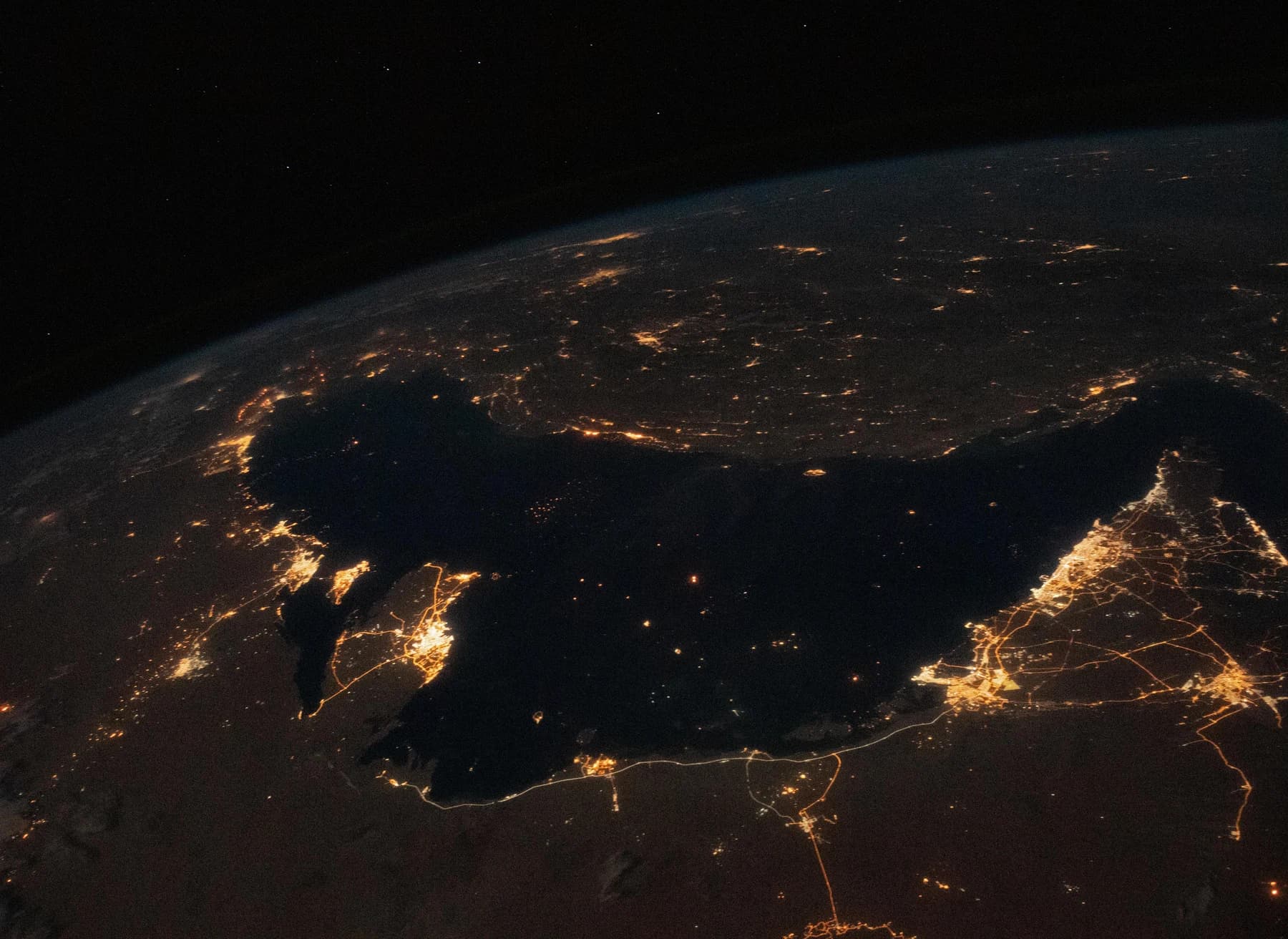
The strait links the Persian Gulf with the Gulf of Oman and the Arabian Sea. NASA describes it as varying in width between 39 and 96 kilometres.
The IEA reported that, by the end of September, global observed oil inventories were 509 million barrels below their level at the end of February.
Photo: City lights around the Persian Gulf and ships in its waters, photographed at night from the International Space Station on 31 August 2020. (photo credit: NASA)
Image source and reuse record: research-notes.json.
More from World
IEA Expects World Oil Demand to Fall 2.6 Million Barrels a Day as Diesel Shortage Extends into 2027
The agency says Gulf crude exports recovered to more than three-quarters of pre-war levels in September, but renewed attacks leave supply fragile and diesel prices near double their pre-crisis level.
Navi Pillay Wins 2026 Nobel Peace Prize for Work on International Law
The Norwegian Nobel Committee cited the South African jurist's role in ensuring war crimes, crimes against humanity and genocide are prosecuted, three days before she visited the International Criminal Court.
UK Calls for New Debt Deal for Developing Countries at IMF and World Bank Meetings
Foreign Secretary Ed Miliband told a Bangkok audience that small island states face an existential climate threat on top of high debt-servicing costs, and backed wider use of clauses that pause repayments after disasters.
US and China Agree Framework for Tariff Relief on US$30 Billion of Goods Each
Product lists use 2024 trade values. Any tariff reductions still require implementation through each country’s domestic legal processes.