Taxpayers Must Now Pay Half of a Disputed Tax Bill before Appealing, as New Law Takes Effect
The President ratified the change on 19 November after Parliament passed it by 54 votes to 12. A second law, in force from 1 January, cuts the cap on interest deductions to 25% of tax-EBITDA.

The News
Taxpayers who want to challenge a tax assessment at the Tax Appeal Tribunal must now first pay at least half of the amount they are disputing. The minimum was 25% until Thursday.
President Mohamed Muizzu ratified the Fifth Amendment to the Tax Administration Act on 19 November, the President's Office said. The law, numbered 20/2026, was published in the Government Gazette the same day and took effect on publication.
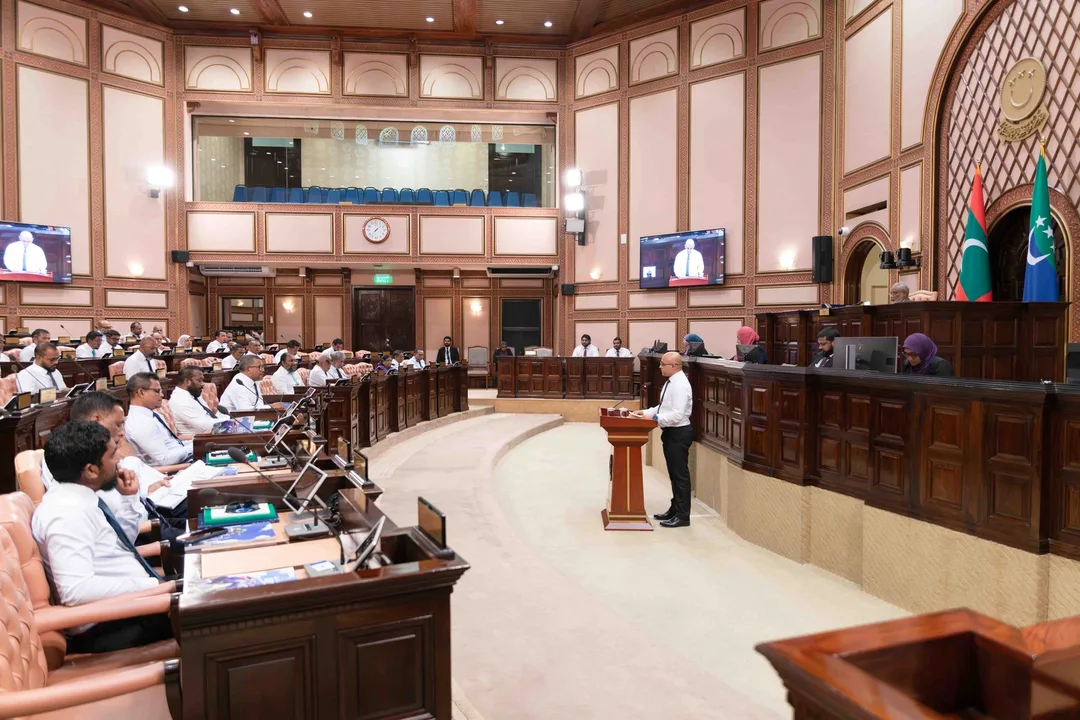
Parliament passed the bill on Tuesday, 17 November, by 54 votes to 12, with no abstentions. Seventy-six members were present, 75 were eligible to vote and nine did not vote, according to the chamber's voting record.
The record shows the votes against came from 11 members of the opposition Maldivian Democratic Party and one independent. All 54 votes in favour came from the governing People's National Congress.
Know More
Under the law, an appeal against an amount assessed by the Maldives Inland Revenue Authority (MIRA) can go to the tribunal only after the taxpayer has paid MIRA at least 50% of the amount being appealed.
The whole amount must be paid first in four kinds of case:
- transactions covered by section 66 of the Income Tax Act
- transactions covered by section 67 of the Income Tax Act
- supplies of goods or services to related parties under the Goods and Services Tax (GST) Act
- transactions described in section 19(d)(5) of the GST Act
When the bill was before Parliament, Maldives Today reported that the two Income Tax Act provisions deal with the general anti-avoidance rule and with deals between associated persons that are not on arm's-length terms.
Both percentages are worked out without counting any fines or interest owed on the disputed amount. Nothing has to be paid to appeal an assessment to the extent that it only reduces a tax loss carried forward under the Income Tax Act.
Regulations needed under the law must be published in the Gazette within 90 days.
The President also ratified the Third Amendment to the Income Tax Act on 19 November. That law, numbered 18/2026, comes into force on 1 January 2027.
It lowers the "interest capacity" used in the Act's thin capitalisation rule to 25% of a taxpayer's tax-EBITDA, according to the text in the Gazette. The President's Office said the ceiling had been 30%. It said the amendment also limits deductions for interest paid to parties other than financial institutions.
The new rules apply to taxable income for the 2027 tax year and later years. Parliament passed that bill on 17 November by 65 votes to none, with 10 members not voting, its voting record shows.
| Law | What changes | In force |
|---|---|---|
| 20/2026, Tax Administration Act | Pay at least 50% of disputed tax before appeal, or 100% in four kinds of case | 19 November 2026 |
| 18/2026, Income Tax Act | Interest capacity cut from 30% to 25% of tax-EBITDA | 1 January 2027 |
| 19/2026, GST Act | GST on overseas tourism sellers ended, with refunds back to 1 October | 19 November 2026 |
Step Back
The payment required before a tax appeal has changed three times in seven years. The Act's second amendment, issued in September 2019, set it at a minimum of 30% of the disputed tax. The third amendment, issued in December 2020, lowered it to 25%, according to MIRA's translations of the two laws.
The government submitted all three tax bills to Parliament on 20 October. Members accepted the Tax Administration Act bill on 27 October by 54 votes to 11.
The third law ratified on 19 November ends GST on Maldives holidays sold by overseas tour operators and travel agents, as Maldives Today reported. It also adds a general rule against GST avoidance and raises the GST registration threshold to MVR 1.5 million from 1 January 2027.