
The reefs dodged a bleaching year — but recovery is starkly uneven
Biosphere Expeditions' annual survey finds inner lagoon reefs lagging far behind the cooler outer slopes, two years after the 2024 heat.
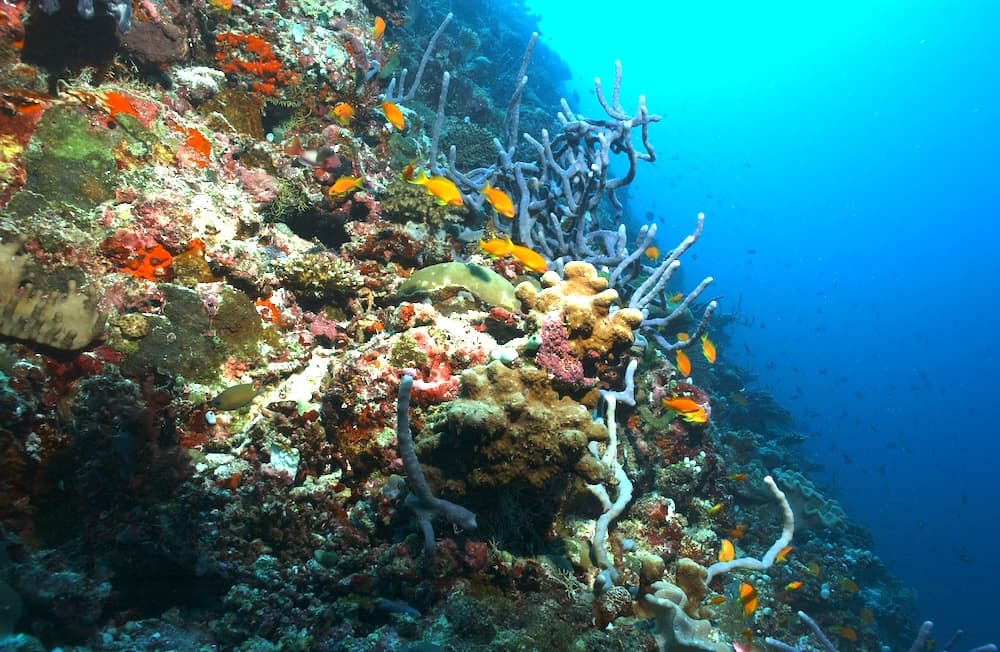
The Maldives escaped a mass bleaching event in 2025, but recovery from the severe thermal stress of 2024 is starkly uneven, according to Biosphere Expeditions' thirteenth annual reef report, published this week from fieldwork conducted last October across Ari, South Malé and Vaavu atolls by citizen scientists working under professional marine biologists.
The pattern the surveyors describe is an inner–outer dichotomy: lagoonal reefs inside the atolls lag well behind the cooler, current-washed outer slopes. The finding rests on published research — and the numbers behind it are stark. A peer-reviewed study in the journal Coral Reefs this spring quantified what the 2024 anomaly took: sea-surface temperature peaked at 31.5°C, the highest on record for the Maldives and a full degree above the local bleaching threshold, and stayed above it from March to July. Central-atoll lagoon reefs lost more than 40 per cent of their live hard coral on average, with mortality reaching 57 per cent at one Ari Atoll site, falling heaviest on the branching and tabular Acropora.
The same study carries the archipelago's one piece of good news, and it is southern. Huvadhoo Atoll showed no detectable mortality at all — coral cover actually rose between surveys — which the authors attribute to broader channels, stronger oceanic flushing and lighter human pressure. They argue the southern atolls should be identified and protected as climate refugia, the reservoirs from which a future recovery might be seeded.
The 2024 event, the researchers conclude, marks heat stress shifting from episodic disturbance to a recurrent and predictable phenomenon: it matched the spatial extent of the 2016 bleaching while approaching the intensity of the catastrophic 1998 event.
Biosphere Expeditions, which has run its Maldives programme since 2011 and now holds one of the few continuous independent datasets on the central atolls, names the familiar compounders — acidification, overfishing, sedimentation, waste — and repeats the standing projection that 70 to 90 per cent of the world's tropical reefs may be lost by 2050 even under 1.5 degrees of warming.
More from Environment
Plastic Free July closes with a mangrove day at Huraa
Community planting and a cleanup with the island council end a month of ocean programming — in a country producing 43,000 tonnes of plastic waste a year.
The atolls have lost another inch, and the monsoon has only just retreated
Measurements from three outer atolls this week show mean high-water levels rising faster than the government's own projection.
Seawall at GDh. Thinadhoo clears environmental review after redesign
The ministry signs off on a modified alignment that keeps the southern reef flat untouched.
A nineteen-year study of Maldivian reefs reports a mixed picture
Coral cover in some sheltered lagoons is recovering; exposed outer reefs are not.