All Three Maldives Reef Ecoregions Rated Critically Endangered in First Global IUCN Coral Reef Assessment
The rating rests on projected ocean warming over the next 50 years. On the past 50 years of change alone, the three Maldivian ecoregions are rated Vulnerable.
The News
All three coral reef ecoregions of the Maldives have been assessed as Critically Endangered in the first global assessment of coral reefs under the IUCN Red List of Ecosystems, published on 22 October.
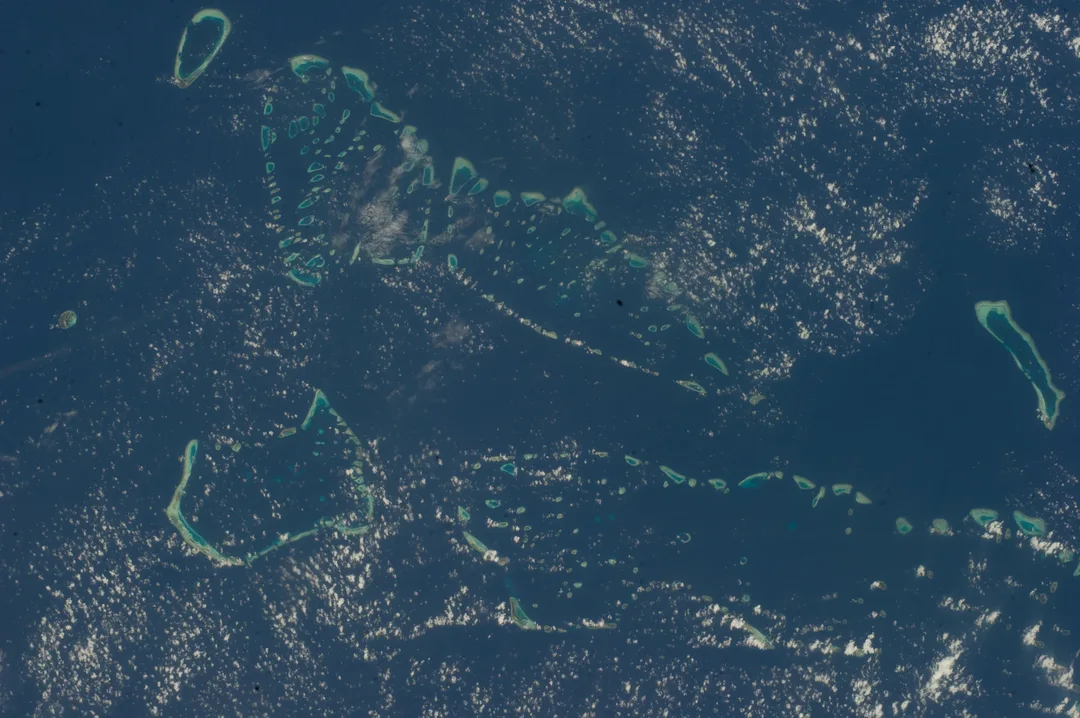
The assessment splits the country’s reefs into three ecoregions: Maldives-North, Maldives-Central and Maldives-South. Each is rated Critically Endangered overall, the highest threat category short of collapse, according to the regional summary for South Asia.
Globally, 96% of assessed shallow-water coral reef ecosystems were rated Critically Endangered, the International Union for Conservation of Nature (IUCN) said in its press release.
Know More
The overall rating for the Maldives is driven by one criterion: projected heat stress from ocean warming over the next 50 years. The assessment uses a middle-of-the-road climate scenario from the Intergovernmental Panel on Climate Change, which the IUCN says projects 2.7°C of atmospheric warming by the end of the century.
Based only on the past 50 years of observed change, each of the three Maldivian ecoregions is rated Vulnerable, two categories lower.
| Ecoregion | Observed change | Overall rating |
|---|---|---|
| Maldives-North | Vulnerable | Critically Endangered |
| Maldives-Central | Vulnerable | Critically Endangered |
| Maldives-South | Vulnerable | Critically Endangered |
The detailed results table shows how each rating was reached:
- All three are Vulnerable for their restricted geographic extent and for heat stress already recorded.
- Maldives-Central is also Vulnerable because of declines in hard coral cover and grouper biomass.
- Maldives-South is Near Threatened on that measure.
- Maldives-North lacks enough monitoring data to be assessed on coral cover and fish, or on the reduction in its reef distribution.
Step Back
The South Asia region covers 13 ecoregions across India, Bangladesh, Sri Lanka, the Maldives and the Chagos Archipelago. It holds about 8,282.6 square kilometres of reef, or around 4% of the world total. All 13 were rated Critically Endangered.
The summary describes thermal stress and mass bleaching due to climate change as the most immediate widespread threat in the region. It says the 1998 and 2016 El Niño events caused major declines in live hard coral cover. It also lists overfishing, coastal development, dredging, land reclamation, harbour construction and pollution.
Worldwide, the assessment covered 127 ecoregions and 188,362 square kilometres of reef, with more than 250 experts taking part, the IUCN said. On observed change alone, 24% of reef ecosystems would be Critically Endangered. The Western Galápagos Islands were assessed as already collapsed, a state the IUCN dates to the 1982–83 El Niño.
In a separate reassessment of 892 reef-building coral species on its Red List of Threatened Species, the IUCN said 44% are threatened with extinction.
Mishal Gudka, the scientific lead of the assessment, called for emissions cuts, clean coastal waters and sustainable fishing, according to the press release.
The Maldives Meteorological Service expects El Niño to peak around December, as Maldives Today reported on 24 October. NOAA Coral Reef Watch’s Maldives station showed a Bleaching Watch, the first level above “no stress” on its scale, with zero degree heating weeks of accumulated heat stress, in its daily record for 23 October.