Government Bill Would Criminalise Genocide, Treason and Harm to the Economy
Genocide and treason would be class 1 felonies, and senior officials would face heavier penalties for inciting genocide or harming the economy. The bill, submitted on 25 October, has not had its first reading.
The News
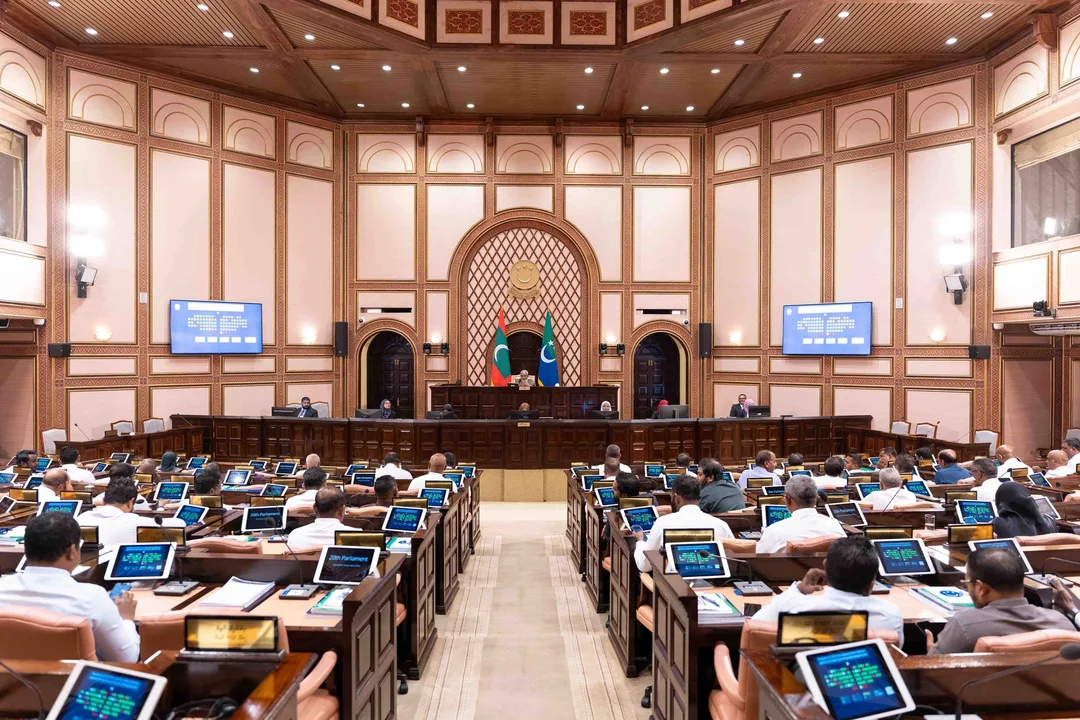
A government bill submitted to Parliament on Sunday, 25 October, would make genocide, treason and acts that harm the country's "economic security" crimes under the Penal Code.
The bill, 20/2026/B-34, was submitted on behalf of the government by Maafannu South MP Abdulla Rifau. A Majlis Secretariat stamp on the bill shows it was received at 1.54pm that day.
It would add new Penal Code chapters on genocide, economic security and treason. Two of the new offences would carry heavier penalties for senior officials, including the President, ministers and MPs. The bill would also raise the penalty for an existing offence relating to Islam.
Parliament's page for the bill lists it as submitted at the 10th sitting, held on Tuesday, 27 October. The bill was not on the agenda for that sitting, which lists only a debate on a Tax Administration Act amendment and a committee report on Parliament's rules. Parliament has not published a reason for leaving it out.
Know More
The genocide section covers killing, or causing serious bodily or mental harm to, members of a national, racial, ethnic or religious group. It also covers imposing conditions of life meant to destroy the group physically, preventing births and forcibly transferring its children. The acts must be carried out with intent to destroy the group in whole or in large part.
Genocide would be a class 1 felony. Directly and publicly inciting it would be a class 1 felony for the President, a minister, an MP, a judge or a security services commander, and class 2 for anyone else. Obeying a superior's order, or the act being permitted by law, would be no defence. Nor would the offender's status as a head of state, state employee or private individual matter.
Under the economic-security section, three kinds of act would become crimes if the person knew they could cause substantial damage to the state's economy, or was reckless about that risk:
- damaging essential facilities or computer systems connected to them;
- disrupting an essential service, or obstructing the systems that provide it;
- acting to halt a main sector that earns revenue for the state, where this causes substantial economic damage.
This would be a class 2 felony for a person in a senior post running the state or government, and class 3 for anyone else.
Treason would cover a Maldivian citizen who intentionally wages war against the Maldives, joins a party doing so, or sides with and helps an enemy at home or abroad. An enemy means foreigners whose acts harm the country's independence and sovereignty, and Maldivians who join them. Treason would be a class 1 felony, and a convicted citizen could never be appointed to any state job or post.
The offence in section 617, now a class 1 misdemeanour according to the bill's comparison table, would become a class 4 felony if premeditated with intent to create hatred of Islam or undermine religious unity, and class 5 otherwise.
Step Back
The Maldives acceded to the Genocide Convention on 24 April 1984, the UN treaty record shows. Under Article V, parties undertake to pass the laws needed to give it effect, with effective penalties.
Attorney General Ahmed Usham wrote on X on the night of 26 October that the Maldives had not met that obligation in 42 years. He said this affected the legal arguments the Maldives had made at the International Court of Justice. Court records show the Maldives filed declarations of intervention in The Gambia v. Myanmar on 15 November 2023 and South Africa v. Israel on 1 October 2024.
In a further post on 27 October, Usham said the government was "correcting a legislative failure that has persisted for over four decades". Neither post discussed the economic-security or treason chapters.
Former Prosecutor General Hussain Shameem, appointed in December 2019, wrote in a blog post on 26 October that his main concern was the economic-security chapter, not genocide. Because the bill grades the offence higher for senior officials, he argued, it contemplates ministers and even the President committing it. With no good-faith exception, he wrote, a policy that disrupted a revenue-earning sector could be prosecuted. He also noted that the bill does not address international tribunals' jurisdiction under Articles VI and VII of the convention.
On Tuesday, Parliament's website still listed the bill's status as "submitted".
The Record
- People's Majlis: bill 20/2026/B-34, amending Law 9/2014 (Penal Code), bill page
- People's Majlis: bill 20/2026/B-34, full text (PDF, Dhivehi)
- People's Majlis: 10th sitting of the third session, 27 October 2026
- People's Majlis: agenda for the 10th sitting, 27 October 2026 (PDF, Dhivehi)
- Attorney General Ahmed Usham on X, 26 October 2026 (Dhivehi)
- Attorney General Ahmed Usham on X, 27 October 2026
- Hussain Shameem: blog post on the Penal Code amendment, 26 October 2026 (Dhivehi)
- UN Treaty Collection: Convention on the Prevention and Punishment of the Crime of Genocide, status
- UN Treaty Collection: Genocide Convention, certified text (PDF)
- International Court of Justice: press release 2023/68, The Gambia v. Myanmar (PDF)
- International Court of Justice: press release 2024/65, South Africa v. Israel (PDF)
- President's Office: President appoints Hussain Shameem as Prosecutor General, 8 December 2019