
Tourism revenue holds — but the air-corridor squeeze is real
Tourism is the single most important number in the Maldivian economy, and the figures coming through for the first quarter of 2026 paint a more complicated picture than headline arrivals would suggest. Bookings have held up; markets have rotated; and the regional air-corridor disruption associated with Middle East tensions is already showing up in the numbers — not as a collapse, but as a quiet reordering that will determine whether full-year revenue lands on the optimistic or the pessimistic side of recent forecasts.
The first-quarter arrivals figures, drawn from Ministry of Tourism statistics and confirmed at Visit Maldives Corporation's recent Tourism Intelligence Briefing, point to year-on-year growth in absolute terms but a softer trajectory in receipts per visitor. Greater China, which retook the top spot in 2025 with more than 706,000 arrivals, has continued to lead through the first three months of this year. India, Russia, the United Kingdom and Italy round out the top five, with Italy displacing Germany on the strength of a stronger early-season programme. Tourism arrivals from the Gulf — Saudi Arabia, the UAE, Kuwait and Qatar combined — are running ahead of last year, although the absolute base is smaller.
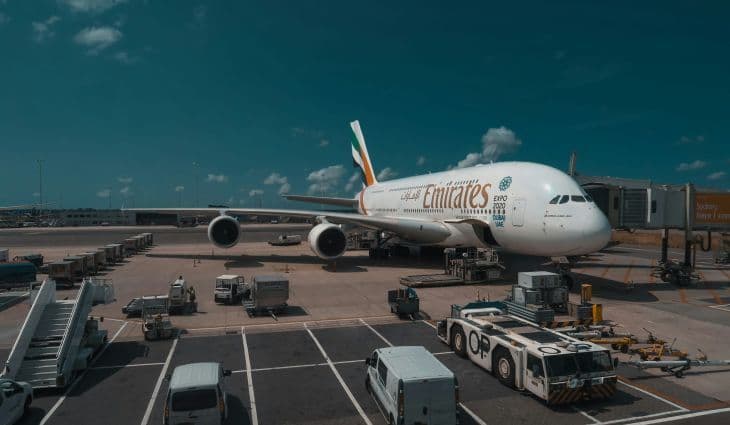
The complication is in the mix. The Maldives is a long-haul destination from almost every market that matters to it, and almost three-quarters of inbound arrivals connect through one of three Gulf hub airports. When operations through those hubs are disrupted, the practical consequences are quick and uneven. Carriers reroute over Egypt, Africa or Central Asia; flights add an hour or two of block time; some routes are cancelled entirely. Premium leisure travellers, who are particularly sensitive to journey time, often defer or substitute. Tour operators rebook in alternative destinations.
Visit Maldives' own framing of the second-quarter picture, set out at the Intelligence Briefing in late April, was deliberately steady: the country is open, fully operational, and intent on positioning itself as a stable choice in a season of regional turbulence. The Briefing also pointed to two operational responses that will run through the rest of the year. The first is a diversification away from a near-total dependence on the Gulf hub model — through the recently launched 'I AM Maldives' Southeast Asia roadshow, through deeper bilateral engagement with East Asian carriers, and through a continued push on the superyacht and private-jet segments where guests bypass the Gulf entirely. The second is more disciplined market segmentation, with a sharper focus on the high-yield travellers who have remained committed to the destination through earlier shocks.
Behind the corridor issue sits a broader question about the structure of Maldivian tourism revenue. The country has, over the past five years, succeeded in lengthening average stays and lifting per-night spend in the high end. The result is that even in years when arrivals growth slows, total receipts have continued to climb. That rebalancing, however, leaves the economy more sensitive to the high-end traveller's calculus — and the high-end traveller is precisely the cohort that worries about journey reliability and that switches destinations most readily.
The early signs from operators are mixed. Resorts at the very top of the segment report that the cancellation rate from European markets has remained inside historical norms, although forward booking pace into August and September has slowed slightly. Mid-market resorts have seen sharper effects. Guesthouses on the inhabited islands, which are more dependent on lower-fare regional traffic and on direct flights from India and Sri Lanka, have been least exposed to the air-corridor question and most exposed to general regional sentiment.
The macroeconomic implications extend well beyond the resort verandah. Tourism receipts are the single most important determinant of foreign-exchange supply in the system; any softening shows up first in dollar liquidity in the banking sector. As Bank of Maldives' recent tightening of card programmes has demonstrated, the lag between tourism softness and visible retail effects can be short. The Ministry of Finance and the Maldives Monetary Authority have framed their planning around a base-case in which arrivals growth holds at the low single digits for the full year, with a downside scenario in which arrivals are flat and an upside in which they accelerate in the second half as Gulf operations normalise.
What is not in dispute is the policy direction. The government, through the Ministry of Tourism and Visit Maldives Corporation, is pushing the diversification agenda harder than it has at any point in the past decade. Greater geographical balance in source markets, greater redundancy in air connectivity, and a deliberate effort to deepen niche segments — diving, weddings, MICE, yachting — are all components of the same insurance policy.
The air-corridor squeeze of 2026 is, in that sense, not an emergency. It is a reminder. The destination's commercial model has assumed cheap, fast, predictable connectivity through the Gulf for the better part of two decades. The current year is the first in some time in which all three of those adjectives have been in question simultaneously — and it will not be the last.
More from Business