























Do the Maldives Have Too Many Sharks ? Fear, Danger, and Facts
Read Original Do the Maldives Have Too Many Sharks ? Fear, Danger, and Facts Sharks in the Maldives. The endless story…For some, a danger, for others a thrill. Between fear and fascination, in reality, these fascinating creatures reveal more about us than about them.Today,… BY Dreaming of Maldives - Your Unique Travel Guide to the Maldives
Sharks in the Maldives: Unveiling the Truth Beyond the Headlines
For many travelers, the image of sharks in the Maldives is a powerful draw—a symbol of wild, pristine ocean health. For others, recent headlines and viral videos have painted a different, more fearful picture. But what's the reality beneath the surface? The truth is more complex and nuanced than a simple story of too many sharks.
A recent, in-depth report by The Maldives Independent cuts through the noise, revealing a nation at a crossroads. While the Maldives remains an official shark sanctuary, a growing tension simmers among locals, fishermen, and the diving community. Some believe shark populations have surged since the landmark 2010 fishing ban, testing public support for one of the country's most celebrated conservation policies.
This is a story not of monster sharks, but of changing human behaviors, clashing perspectives, and the challenging work of balancing ecological protection with economic reality.
Between Fear and Fascination: A Nation Divided
The debate over sharks in the Maldives is far from new. Historically revered by many locals, sharks have always been part of the Maldivian seascape. However, recent years have seen a rise in negative interactions, fueling fear and frustration.
In April 2024, a freediver was injured in an incident involving what was possibly a bull shark. This followed a fatal attack on a soldier during a training exercise in Laamu Atoll the previous year. For island communities, these rare but dramatic events feel like a trend, reigniting age-old fears that shark numbers are growing unchecked.
From the fishermen's perspective, the impact is economic and direct. Many report significant depredation—sharks biting or stealing their catch—leading to daily income losses estimated between 20% and 40%. One frustrated fisherman from Laamu Atoll captured the sentiment, telling reporters, "We are not against conservation, but when sharks are taking our livelihood, something has to change." For them, the 2010 ban, while well-intentioned, has created an imbalance that harms their way of life.
Yet, scientists point to a different set of data. According to marine biologists from the Maldives Marine Research Institute (MMRI), there is no scientific evidence of a population explosion. Long-term monitoring through the national Sharkwatch Programme, covering over 11,700 surveys across 540 sites, shows shark numbers have remained stable, not surged.
So, if the science says populations are stable, why does it feel like there are more sharks causing more problems? The answer lies not in shark numbers, but in shark behavior—and human activity is the primary catalyst for change.
The Human Factor: How We Are Changing the Encounter
Experts agree that the core of the issue is behavioral, not biological. Human practices are unintentionally drawing sharks closer to people, blurring the natural boundaries.
-
New Fishing Techniques: Modern methods like spearfishing, jigging, and the use of chum bags release blood and vibrations that attract sharks from miles away. This puts fishermen in more frequent, competitive contact with them.
-
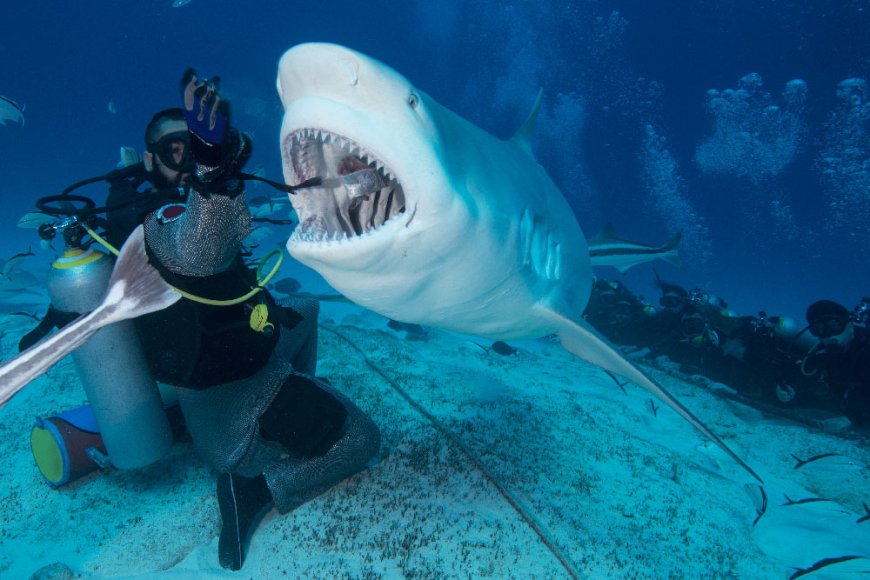
Unregulated Tourism Practices: Despite a government ban, some dive operators still engage in shark feeding or "chumming" to guarantee dramatic encounters for tourists. A February 2024 incident at the "Shark Tank" dive site near Hulhumalé, where a panicked shark entangled in a chum rope struck divers, perfectly illustrates the dangers. These practices teach sharks to associate boats and humans with an easy meal.
-
The "Instagram Effect": The pursuit of the perfect social media shot has led to risky behavior. The infamous "Shark Point," where snorkelers once jumped en masse into water with fed nurse sharks, is a stark example. While this specific site is now quieter, the mentality persists, prioritizing a viral moment over safety and ecological ethics.
-
Waste Management: The disposal of food waste and fish offal near reefs and harbors creates artificial feeding zones, conditioning sharks to linger near human activity.
Shaha Hashim, Executive Director of Maldives Resilient Reefs, explains this shift clearly: "Shark feeding and disposal of food waste near reefs have taught sharks to associate humans with food." She emphasizes, "We are not against shark tourism. We want to sustain it, but strong regulation is urgently needed."
A Sanctuary Under Scrutiny: The Future of Sharks in the Maldives
The 2010 shark fishing ban was a monumental achievement that positioned the Maldives as a global leader in marine conservation. It protected over 30 species and helped sustain a lucrative shark tourism industry, where a single living shark is estimated to be worth far more over its lifetime than its one-time value as catch.
However, the current debate shows that a top-down conservation decree is not enough. For the sanctuary to endure, it must have the sustained support of the communities that live alongside these predators daily. The call from some fishermen to reopen limited, regulated shark fishing is a symptom of this disconnect—a plea for their voices and economic losses to be acknowledged in the management plan.
The path forward requires a multi-faceted approach:
-
Science-Based Management: Continuous, transparent monitoring by the MMRI is crucial to inform policy. Data must be communicated effectively to the public to bridge the gap between local experience and scientific observation.
-
Strict Enforcement of Regulations: The bans on shark feeding and chumming must be vigorously upheld. The tourism industry, a major beneficiary of healthy sharks, must be a leader in promoting ethical encounters.
-
Community Engagement and Compensation: Exploring mechanisms to offset fishermen's economic losses from depredation could alleviate tension. Involving local communities in shark stewardship and tourism could foster a sense of shared ownership.
-
Tourist Education: Visitors must be educated on responsible behavior. Choosing eco-conscious dive operators and understanding that a distant, natural shark sighting is more valuable than a staged feeding frenzy is key.
The sharks of the Maldives are at a symbolic crossroads. They are not monsters, nor are they harmless pets. They are vital apex predators whose health directly reflects the health of the entire coral reef ecosystem—the very foundation of Maldivian life and tourism.
The question is not whether the Maldives has "too many sharks," but rather how a nation can navigate the complex waters of coexistence. The future of the Maldivian shark sanctuary depends on finding a balance that respects both the fishermen's nets and the sharks' fins, ensuring that the archipelago's iconic guardians continue to thrive for generations to come.
For the most current updates and official guidelines on marine life interactions, travelers are encouraged to consult the Maldives Marine Research Institute and choose tourism operators certified by recognized eco-tourism programs.
What's Your Reaction?